Tickets


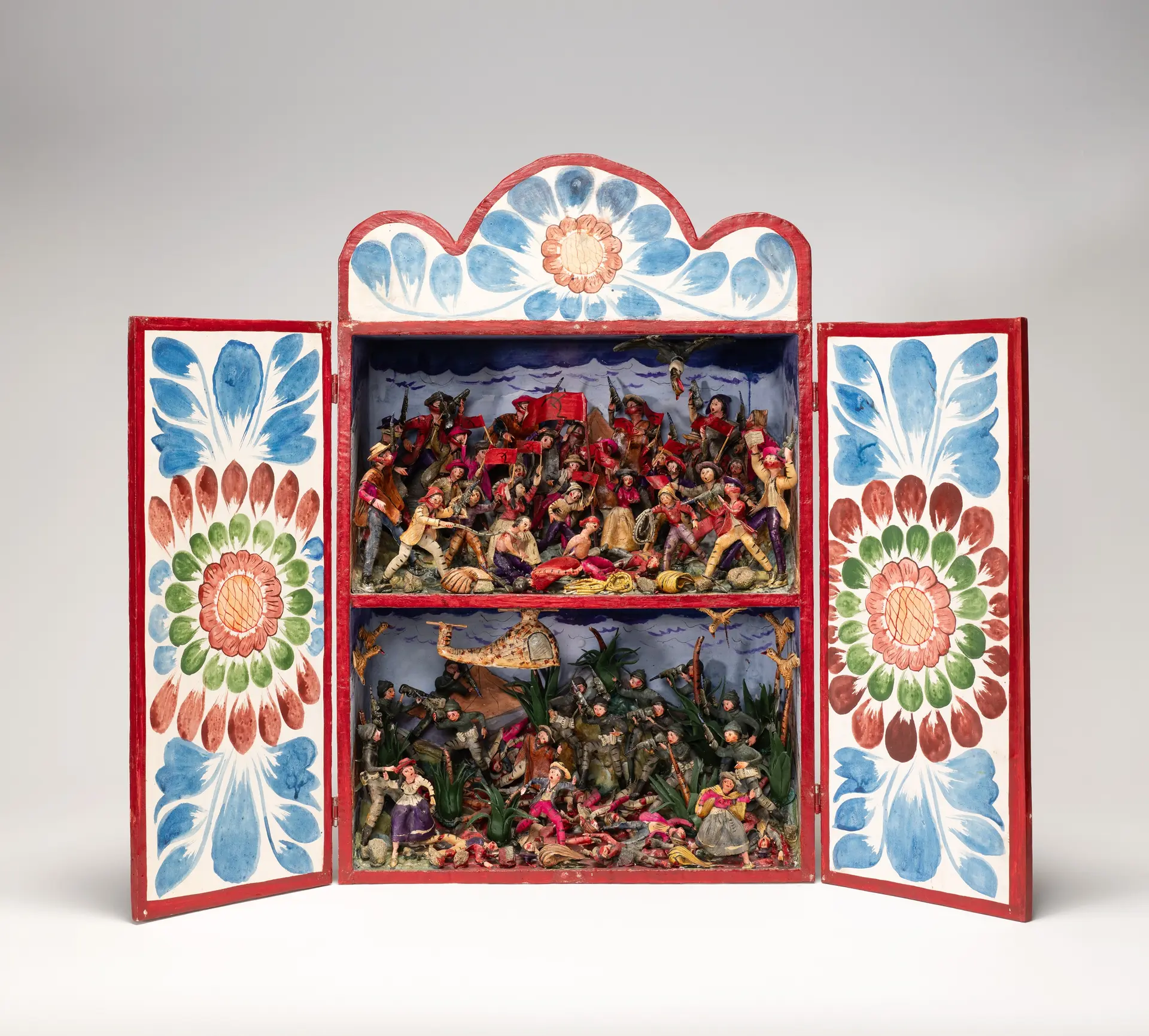
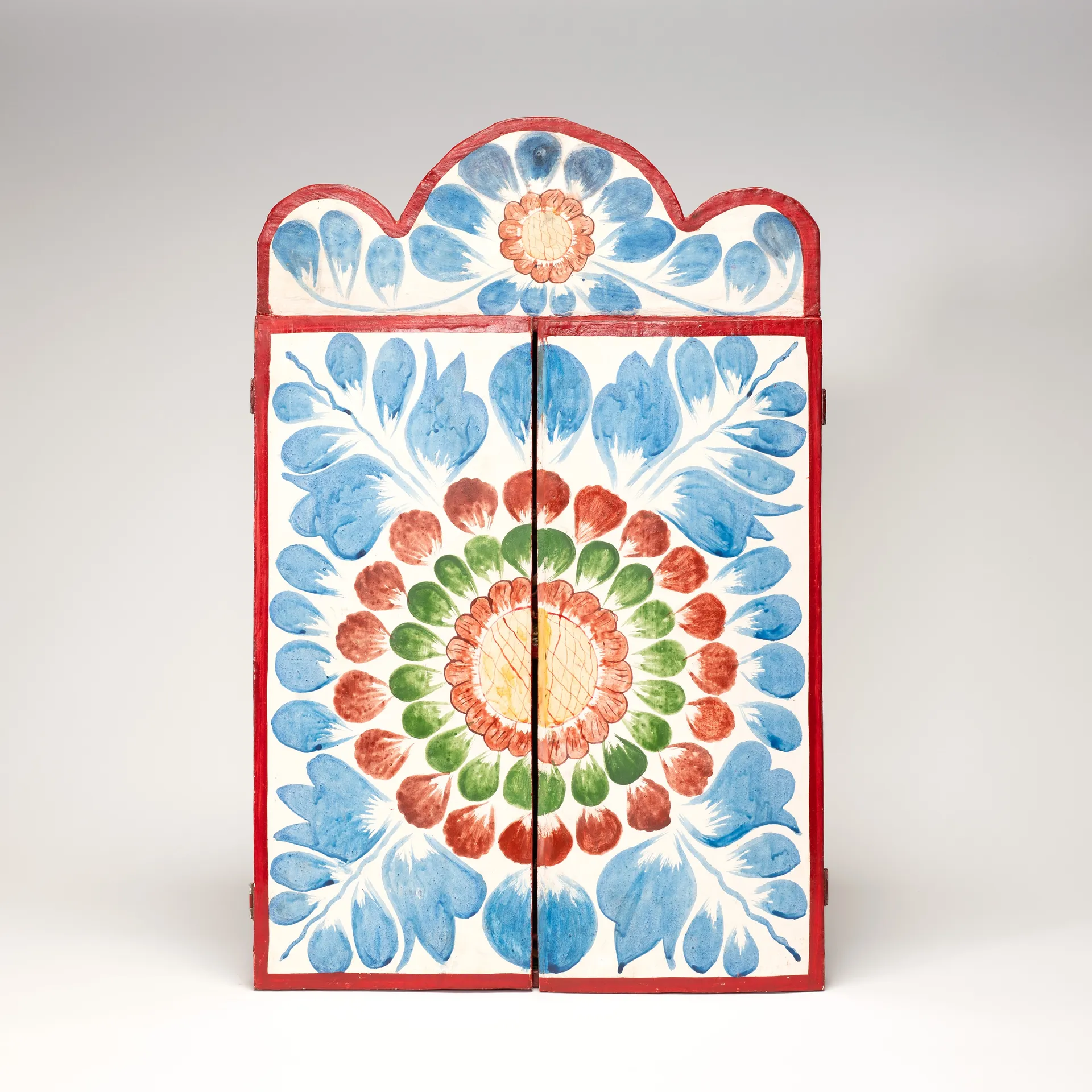
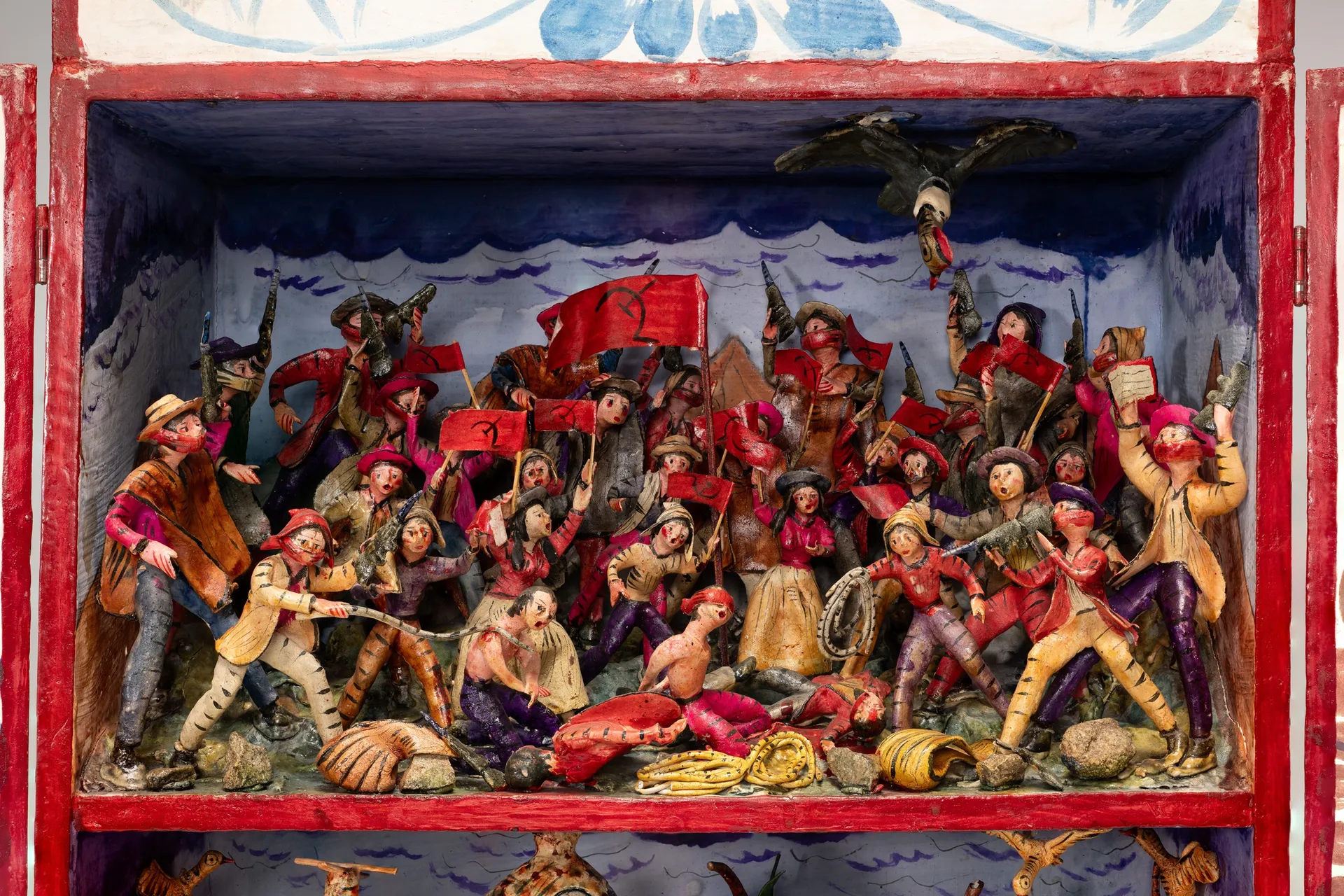
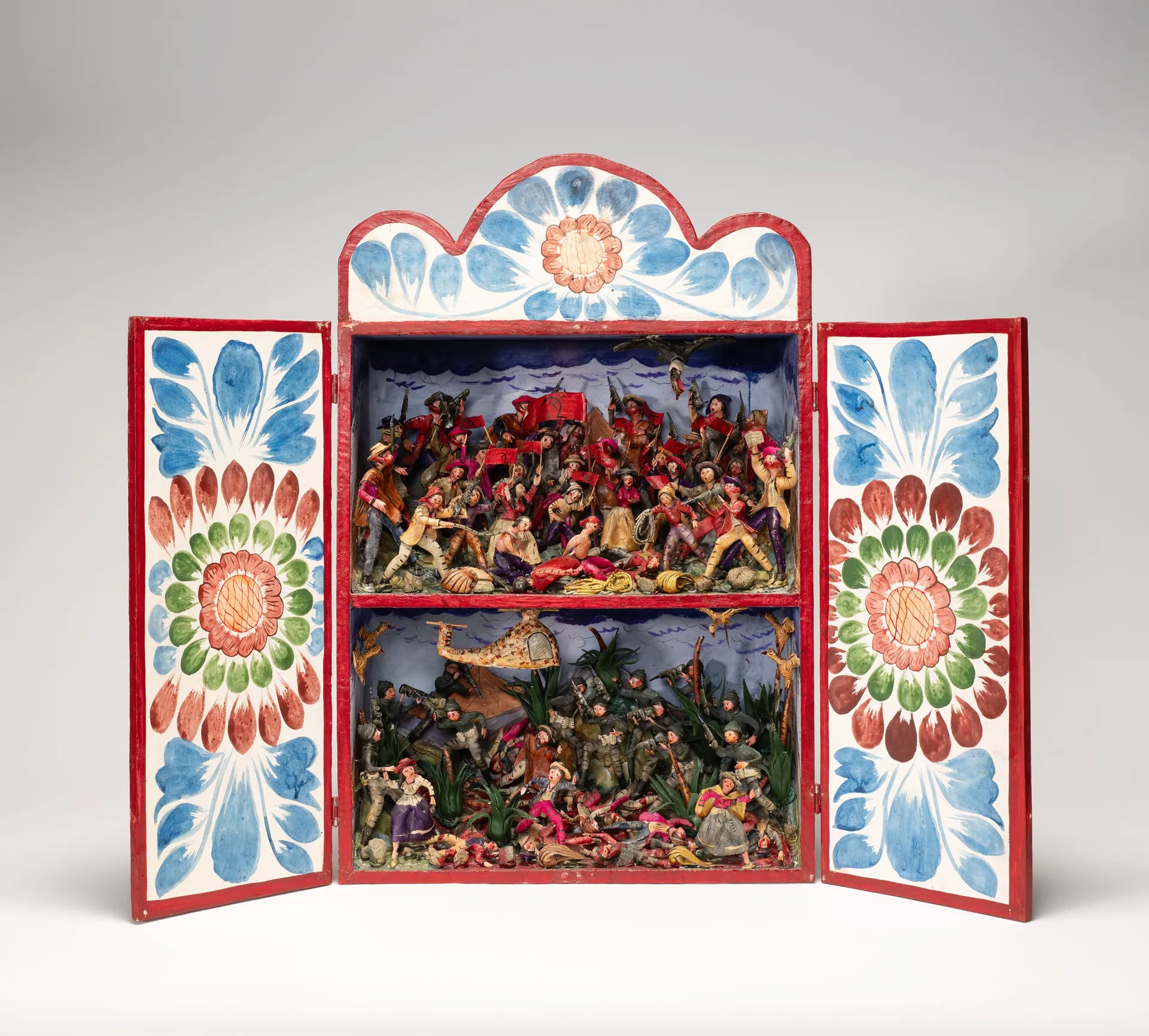
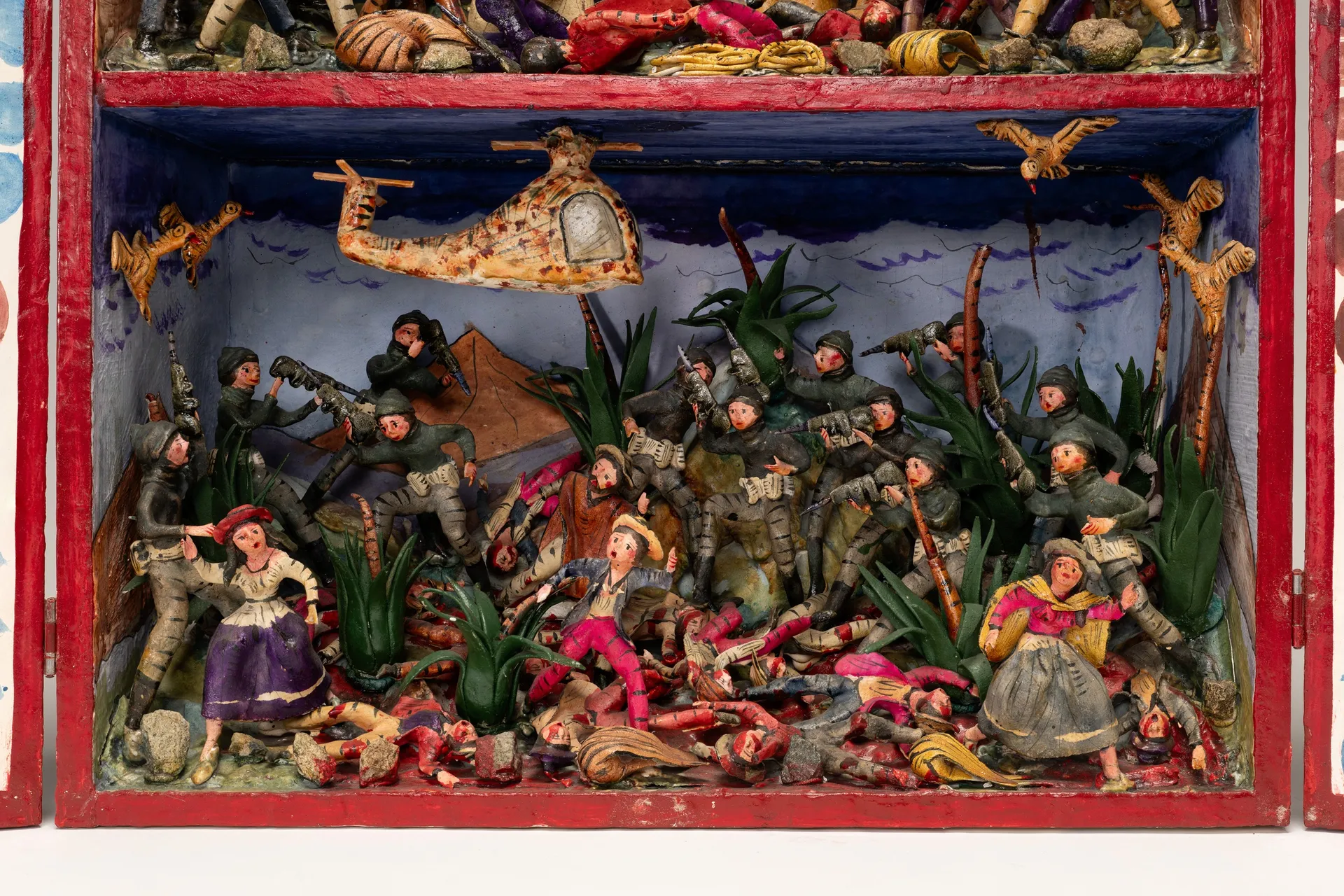
Retablos date back to the Spanish colonial era, and for centuries functioned as portable altars and Christmas scenes. They originally served as devices to further the forced Christianization of Indigenous Andeans, although the latter found in them a medium for artistic expression and a reinterpretation of narrative and artistic conventions within the colonial imaginary. Retablos became quite popular as an artistic practice in the central highlands of Peru, notably in the region of Ayacucho. In many cases artists belong to families who have been making retablos for generations. Throughout the centuries, retablos have continued to depict religious motifs, and they started depicting scenes of secular life during the 20th century. Another retablo in our collection, 2021-13-1, for example, depicts a scene of the Yawar Fiesta, a feast from the central highlands of Peru that symbolizes the struggles under and liberation from Spanish oppressors. In this retablo scene, the condor of the Yawar Fiesta is killing the bull as people around the fighting animals play music, sing, and hold the animals at the center of the scene. A second condor awaits for the first to liberate itself and fly away together. This retablo, made before 1995, is by Claudio Jiménez, one of Nicario Jimenez’s brothers and also a retablo artist himself. Nowadays retablos are quite common as souvenirs.
Artists from Ayacucho utilized the retablo as a medium to show the violence of the Internal War (1980-2000) from the perspective of Indigenous communities. In the 1970s a Maoist guerrilla group, Sendero Luminoso (Shining Path), emerged in Huamanga, the capital city of Ayacucho, under the leadership of Abimael Guzmán Reynoso. They began armed actions against the Peruvian state during the first democratic general election after the military dictatorship of 1968-1980. The central government in Lima ceded control of Ayacucho and other provinces of the central highlands to the armed forces in 1982. What followed were years of relentless violence, displacement, abuses and enforced disappearances committed by both Sendero Luminoso and the Peruvian armed forces. Retablos produced at this time privileged the plight of Indigenous communities, who were otherwise consistently misrepresented in the press and forgotten by the state and the church.